

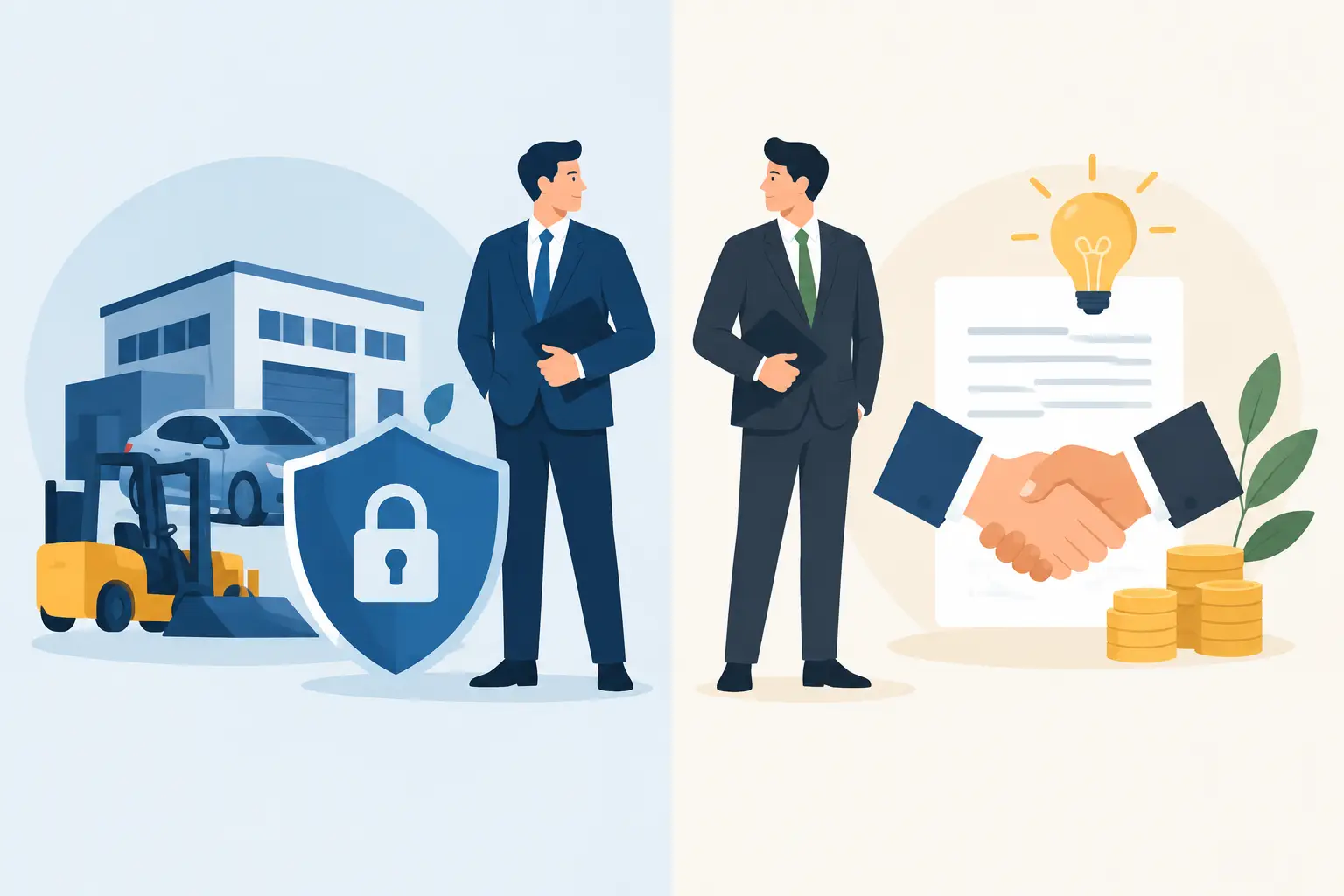
A contractor wins a large job but needs materials before the first customer payment arrives. A restaurant needs to replace a failing walk-in cooler before a busy weekend. In moments like these, secured versus unsecured business financing is not just a lending term. It determines what you can qualify for, how quickly funds may arrive, and what your business could put at risk.
The right choice depends on the purpose of the capital, the assets your company owns, your revenue consistency, and how much flexibility you need. A lower rate is valuable, but not if the approval timeline causes you to miss an opportunity. Fast financing matters, but not if the payment structure puts pressure on operating cash flow.
What secured business financing means
Secured business financing is backed by collateral. Collateral is an asset a lender can claim or sell if the business does not repay the financing as agreed. Depending on the product, that collateral may be equipment, vehicles, inventory, accounts receivable, commercial real estate, or other business assets.
Because the lender has an asset supporting the transaction, secured financing can often offer larger funding amounts, longer repayment terms, and more competitive pricing than an unsecured option. It is commonly used when the money will purchase or support a tangible asset with lasting value.
Equipment financing is a clear example. If a Georgia landscaping company needs mowers, trailers, or heavy machinery, the equipment itself usually serves as collateral. A transportation company buying trucks may use vehicle financing structured around those assets. The business gets the equipment it needs while preserving cash for payroll, fuel, and daily operations.
Asset-based financing works differently but follows the same principle. A company with outstanding invoices, inventory, or equipment may use those assets to support a working-capital facility. This can be useful for wholesalers, manufacturers, staffing firms, and contractors that have revenue on the books but need cash before customers pay.
The trade-off with collateral
Collateral can improve financing terms, but it also creates a real obligation. If payments become unmanageable, the lender may have rights to the pledged asset. Owners should be clear about exactly what secures the financing, whether a personal guarantee is required, and how a default is defined in the agreement.
That does not make secured financing a bad choice. For many established companies, it is the most practical route to meaningful capital. The key is matching the term to the useful life of the asset and the payment to dependable business cash flow.
What unsecured business financing means
Unsecured business financing does not require the lender to take a specific physical asset as collateral. Approval is generally based on factors such as business revenue, time in business, credit profile, bank activity, industry, and the company’s ability to repay.
Common unsecured options include business lines of credit, short-term working-capital loans, certain term loans, and revenue-based financing. These products can be a strong fit when the need is immediate, short-term, or not tied to an asset that can be pledged.
For example, a retail business preparing for a seasonal rush may need inventory before sales increase. A professional services company may need cash to cover payroll while waiting for client invoices. A restaurant may need funding for a quick renovation, marketing push, or supplier deposit. In these situations, unsecured capital can provide flexibility without putting a specific truck, machine, or property directly on the line.
The trade-off with unsecured capital
Without dedicated collateral, lenders take on more risk. That can mean higher costs, shorter repayment periods, lower maximum amounts, or more frequent payments. Businesses with strong revenue and credit may receive better offers, but unsecured financing can still be available to companies that do not fit a traditional bank’s narrow requirements.
The payment schedule deserves close attention. Daily or weekly payments may work for a business with steady card sales or predictable deposits. They can be harder to manage for a construction company, project-based firm, or seasonal operator with uneven revenue. Speed is useful only when the repayment structure fits the way your company gets paid.
Secured versus unsecured business financing: key differences
The biggest difference is what supports the financing. Secured financing relies on a business asset. Unsecured financing relies more heavily on the strength and consistency of the business itself.
That distinction affects several parts of the deal. Secured financing may allow a business to access more capital because the lender can evaluate the value of the collateral. Unsecured financing may move faster because there is no equipment appraisal, lien review, or asset valuation required. Neither rule is absolute, but it is a useful starting point.
Cost can also differ. A secured structure may offer better rates and longer terms when the collateral is strong and easy to value. An unsecured product may cost more, especially for businesses with limited credit history or inconsistent revenue. However, the lowest stated rate is not always the lowest-cost business decision. Missing a purchase discount, losing a contract, or delaying an essential repair can cost far more than the difference between two financing offers.
Personal guarantees are another area to review. Some secured and unsecured products require the owner to personally guarantee repayment. Do not assume that “unsecured” means there is no personal responsibility. Read the terms, ask direct questions, and understand the full obligation before accepting funds.
How to choose the right financing structure
Start with the use of funds. When you are buying a truck, piece of machinery, medical device, or technology with a useful life of several years, secured financing often makes sense. The asset helps support the transaction, and the repayment term can be aligned with the value it creates over time.
When you need flexible working capital for payroll, inventory, marketing, repairs, or a short-term gap, unsecured financing may be more practical. A line of credit can be especially useful for recurring expenses because you can draw funds when needed rather than taking one large lump sum.
Next, look at your cash-flow pattern. A business with reliable monthly revenue may be able to handle a fixed loan payment comfortably. A company with seasonal peaks may need a structure with more flexibility. There is no benefit to taking a large approval if the payment reduces your ability to serve customers, buy inventory, or keep staff paid.
Then consider the asset you would pledge. If your equipment or vehicles are essential to operations, think through the downside before using them as collateral. At the same time, avoiding collateral at all costs can limit the amount and terms available to your business. The right answer is often a balanced one: use secured capital for long-term assets and keep unsecured capacity available for short-term working-capital needs.
Credit matters, but it is not the whole story
Business owners often assume they have only one option because of a credit score. In commercial financing, lenders also consider revenue, business history, industry, deposits, outstanding obligations, and the purpose of the funds. A company with challenged credit but consistent sales may still have viable options. A company with excellent personal credit but weak cash flow may face limits.
That is why lender choice matters. One lender may prefer equipment-backed transactions. Another may focus on revenue-based financing. Another may be comfortable with a business line of credit after reviewing strong bank activity. Applying through a marketplace with a broad lender network can reduce the need to guess which program fits before you apply.
Georgia Business Loans works with more than 75 lending partners and has funded more than $2 billion for businesses seeking growth capital, equipment, inventory, renovations, and working capital. Companies with at least one year in business and credit scores starting at 550 can explore options built around their actual business profile, not just a single bank’s checklist.
Ask these questions before you accept an offer
Before choosing secured or unsecured financing, get clear answers on the total repayment amount, payment frequency, term length, prepayment options, collateral requirements, personal guarantee, and any fees. Ask what happens if revenue drops for a month or a customer payment is delayed. A financing structure should support growth, not create a new cash-flow emergency.
It also helps to compare offers based on the business result, not one number. If one option funds faster but costs more, calculate whether the speed helps you capture revenue or avoid a costly disruption. If another option has a lower payment but requires collateral, decide whether that asset exposure is reasonable for the opportunity in front of you.
The best financing choice is the one that gives your Georgia business enough capital to act, a payment you can manage, and terms you fully understand. A quick pre-approval conversation can help you compare both paths before the next equipment failure, inventory order, or growth opportunity forces a rushed decision.

